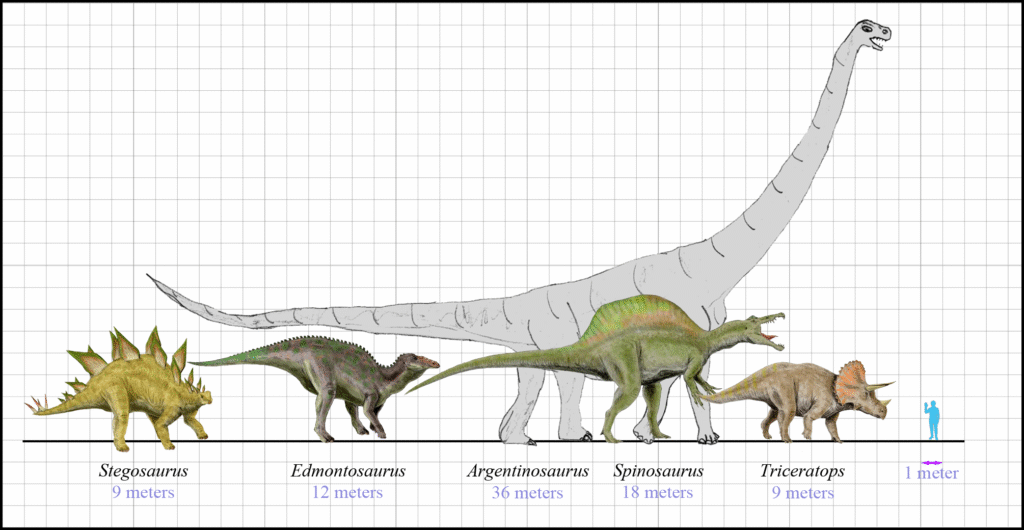
If I have seen further, it is by standing on the shoulders of giants.
A famous and timeless quote. The same has been traced back to the 12th-century French philosopher Bernard of Chartres, who said that we are like dwarfs on the shoulders of giants, so that we can see more than they can, and things at a greater distance, not by virtue of any sharpness of sight on our part or any physical distinction, but because we are carried high and raised up by their giant size.
However, Sir Isaac Newton famously popularized this in a 1675 letter to his rival Robert Hooke. Historians often note that this was a subtle (and perhaps sarcastic) nod to Hooke’s physical size and their bitter rivalry, but it became the ultimate symbol of scientific collaboration.
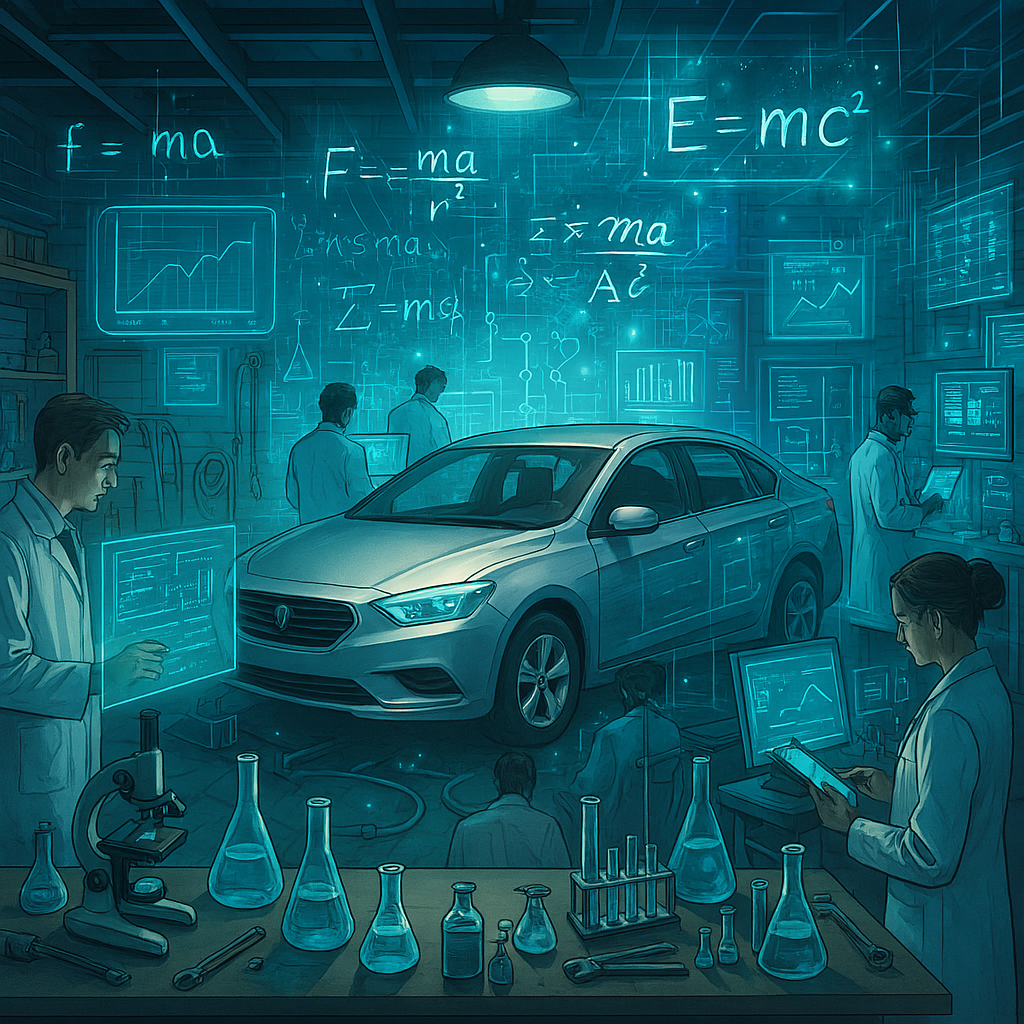
This timeless quote means that our greatest modern achievements, innovations, and discoveries are not made in isolation; they are only possible because we build upon the foundational work of our predecessors.
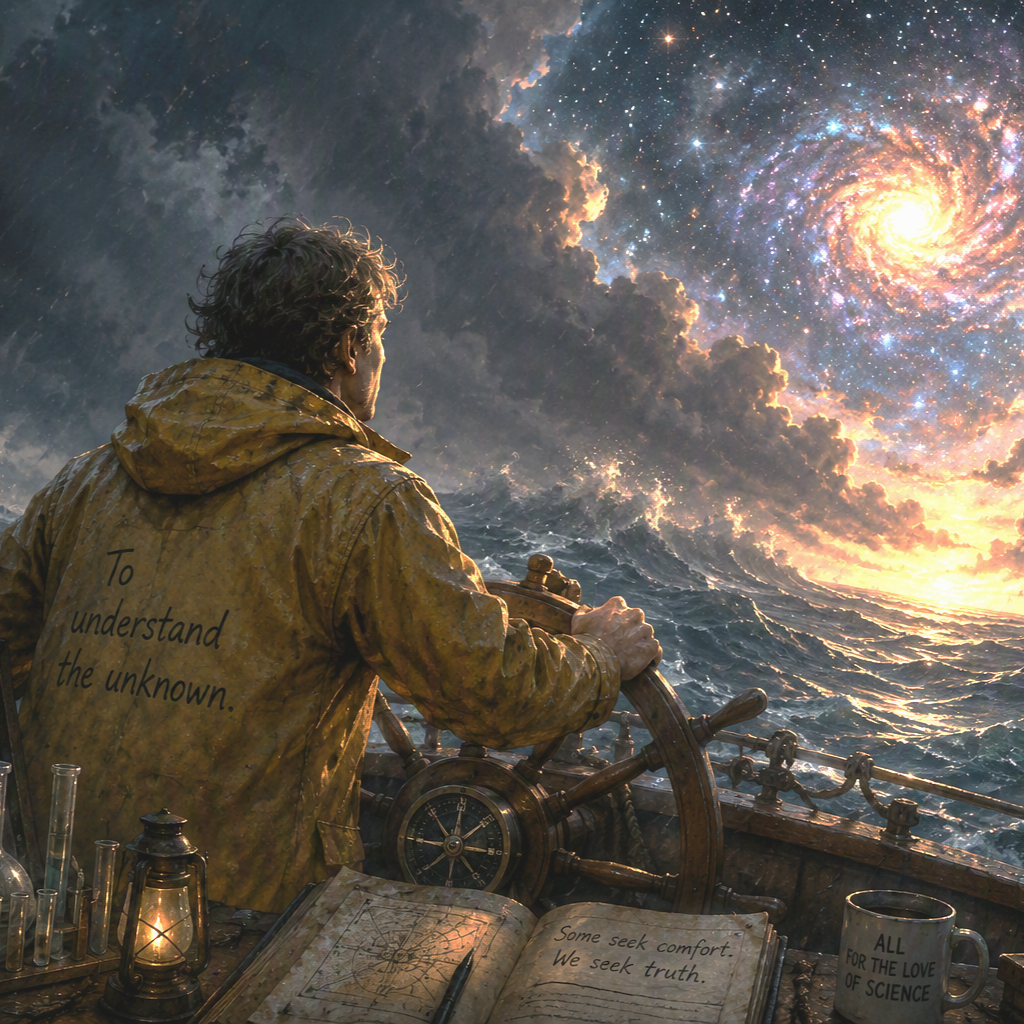
These foundational works are the result of the tireless efforts of multitudes of individuals, generation after generation. These efforts can take myriad forms and shapes: countless lab hours, late nights, skipped meals, time away from family and friends, and sometimes putting one’s own life and health on the line, all for the love of science.
Max von Pettenkofer and Dr. Barry Marshall lived almost a hundred years apart from each other; however, both seemed to have a taste for bacterial cultures.
Pettenkofer, attempting to disprove Robert Koch’s theory that the Vibrio cholerae bacterium alone caused cholera, drank a broth teeming with live cholera bacteria in 1892. Later, in 1984, faced with a skeptical medical establishment, Marshall deliberately swallowed a culture of Helicobacter pylori bacteria.
Pettenkofer suffered mild symptoms, while Marshall developed severe gastritis and ulcer symptoms within days. Marshall successfully proved the bacterial link, revolutionizing gastrointestinal treatment, and won the 2005 Nobel Prize in Physiology or Medicine. On the other hand, while Pettenkofer believed he had won the argument, he had simply gotten lucky. He did not become severely ill because of specific biological factors, not because Koch’s germ theory was wrong.
Pettenkofer and Marshall, same experiment, mostly the same reason—an absolute readiness to do anything for the love of science. Their results differed, but these were giants who had the “stomach” for risks and, obviously, a good culture of bacteria.
A similar giant was Werner Forssmann. In 1929, this German surgical resident believed doctors could thread a tube directly into a living human heart. Disobeying his superiors, he anesthetized his own arm, inserted a 65-centimetre urological catheter into a vein, and pushed it all the way into his heart’s right atrium. He then walked down to the X-ray department to prove it.
He was fired for his recklessness but eventually won the 1956 Nobel Prize when the technique revolutionized cardiology.
Continuing the traditions of these mavericks, enter “medicine’s most-measured man,” Dr. Michael Snyder, a geneticist at Stanford University.
For well over a decade, Dr. Snyder has routinely tracked his body’s molecular shifts. He frequently draws his own blood, tracks his gut microbiome, and monitors his urine and stool. He measures thousands of distinct variables simultaneously, including his genome, proteins, and metabolic markers. He uses his own body as a continuous, high-tech laboratory to pioneer personalized medicine and multi-omics profiling.
Rather than swallowing acute toxins, Dr. Snyder subjects his body to endless, invasive, and intensive personal data monitoring.
Beyond these medicine pioneers, there are notable others who have taken the road less travelled, or simply the road of physical pain.
“Almost pleasant, a lover just bit your earlobe a little too hard.”
Don’t worry, the blog is not taking a wrong turn. This is how Justin Schmidt described the sting of an anthophorid bee.
Schmidt, an entomologist from Arizona, developed the Schmidt Sting Pain Index by subjecting himself to stings from at least 96 species of insects, including bees, hornets, wasps, and ants. Entomologists, pest control professionals, and researchers use it to quantify venom defenses, understand insect behavior, and evaluate potential medical or safety risks to humans.
Before we move on to our next warrior, here’s another of Schmidt’s poetic descriptions, this time after being stung by a warrior wasp:
“Torture. You are chained in the flow of an active volcano. Why did I start this list?”
Moving from stings to broken bones, introducing the Fastest Man on Earth, John Paul Stapp.
This U.S. Air Force officer and surgeon wanted to know how much deceleration forces a human pilot could survive during a crash. Strapped into a rocket-powered sled nicknamed “Gee Whiz”, he propelled himself at 632 miles per hour (1,017 km/h) and stopped in just 1.4 seconds.
The brutal stops fractured his ribs, broke his wrists, and caused his eyes to bleed, but his data directly led to the invention of modern commercial car seatbelts and military ejection seats. Stapp was at Lyndon Johnson’s side in 1966 when the then-US president signed a law requiring carmakers to install seat belts.
While we talk of giants and pioneers, how can we forget Sir Isaac Newton? And no, I am not talking about the apple falling on his head, which, as it happens, has little truth to it and is simply one of those stories that survives because it is too good not to.
All Newton himself ever said, as noted by Stephen Hawking in A Brief History of Time, was that the idea of gravity came to him as he sat “in a contemplative mood” and “was occasioned by the fall of an apple.”
Coming back, Newton subjected himself to a variety of experiments in the name of curiosity. Intrigued by how the human eye perceives light and colour, he slid a blunt bodkin (a large needle) into his own eye socket, pressing against the back of his eyeball until he saw coloured circles and flashes. He also stared directly at the sun with one eye for as long as he could bear, nearly blinding himself for days in order to study after-images.
You might have noticed some of the words I have used to describe these scientists and researchers so far—words not always associated with this breed of individuals: warriors, mavericks.
Another word that is seldom used, but unfortunately comes with the practice of peering into the unknown, is martyrs.
In the 19th century, isolating the highly reactive and incredibly toxic element fluorine was one of the most perilous quests in chemistry.
The Louyet Brothers & Jerome Nickels: Belgian chemist Paulin Louyet and French chemist Jerome Nickels both died from inhaling toxic hydrofluoric acid vapors while attempting to isolate the element.
George and Thomas Knox: These Irish brothers suffered severe poisoning and permanent health damage while working on the same problem. They survived, but the collective deaths and injuries earned this era of chemists the grim title of the “Fluorine Martyrs”.
Similarly, early pioneers of radiation had no idea that the strange, glowing energy they were studying was actively destroying their cellular DNA.
Marie Curie: The legendary two-time Nobel laureate discovered radium and polonium. She routinely carried glowing test tubes in her coat pockets and stored them in her desk drawers. She died in 1934 from aplastic anemia caused by decades of radiation exposure. Her research notebooks remain so radioactive today that they must be kept in lead-lined boxes.
Clarence Dally: An assistant and glassblower to Thomas Edison, Dally enthusiastically tested early X-ray tubes on his own hands. He developed aggressive skin cancers, leading to the amputation of both arms before he died in 1904.
All of the above, and many others like them, are heroes who put their lives on the line because, for them, there really is
nothing that they will not do for science!
And perhaps this is what Newton’s famous quote truly means. When we speak of standing on the shoulders of giants, we often think of great ideas, groundbreaking theories, and transformative discoveries. But behind those achievements stand real people—individuals who swallowed bacteria, threaded catheters into their own hearts, endured venomous stings, exposed themselves to radiation, and sometimes paid the ultimate price in pursuit of knowledge.
References:
https://link.springer.com/chapter/10.1007/978-1-4471-0051-5_5
https://www.bbc.com/future/article/20260406-whats-the-most-painful-sting-in-the-world
https://www.nhm.ac.uk/discover/schmidt-pain-index-insect-stings.html
https://pubmed.ncbi.nlm.nih.gov/17934199
https://pmc.ncbi.nlm.nih.gov/articles/PMC4664087
https://www.theguardian.com/science/blog/2010/nov/11/hardest-bravest-science
https://www.discovermagazine.com/10-weird-wacky-and-worthwhile-experiments-18002