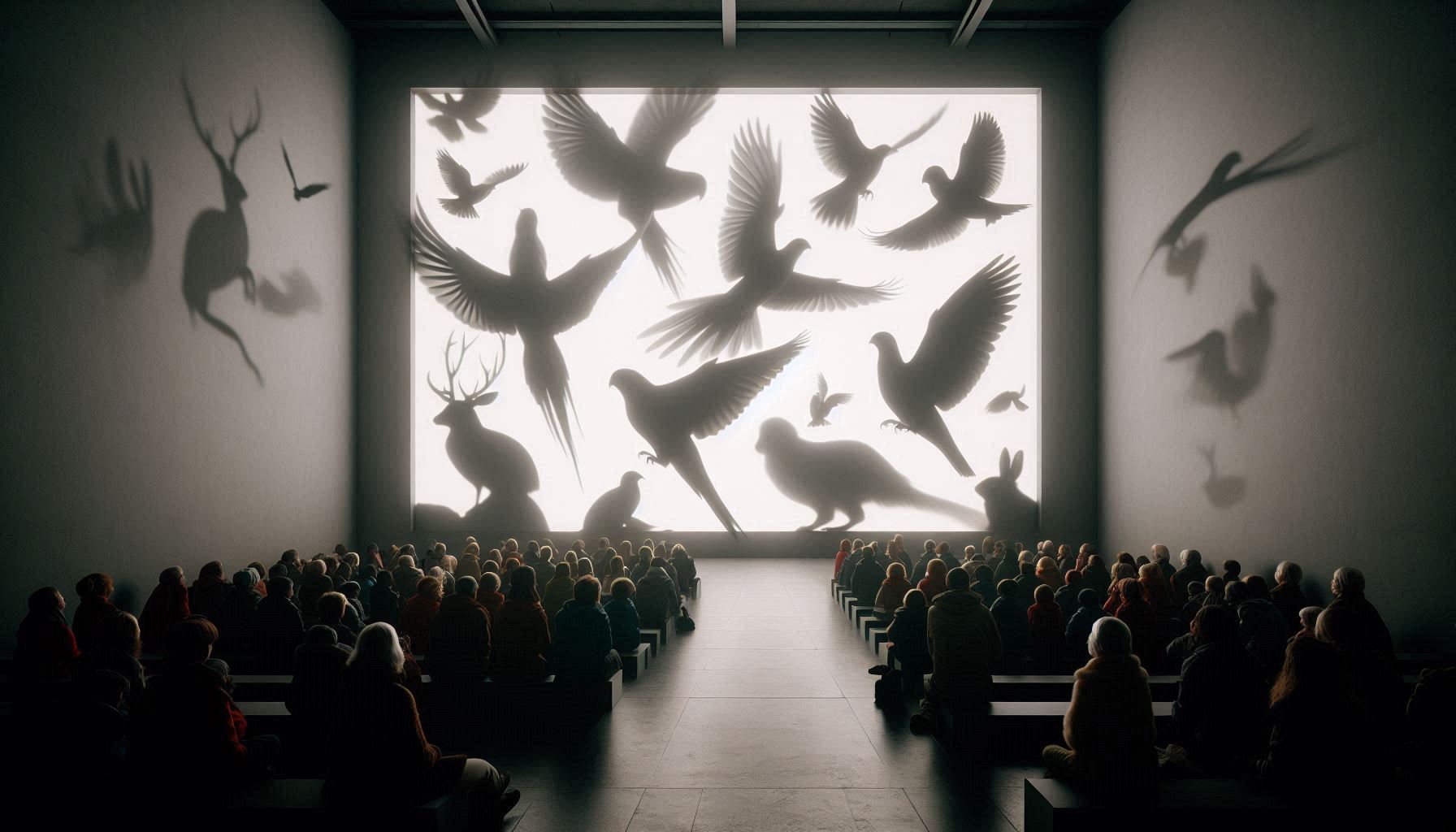
Once upon a time, stories weren’t a way to escape life — they were a way to live it. Songs were sung not for applause but to make sense of joy and sorrow, of hope and fear. A performance wasn’t a spectacle; it was participation. Everyone who watched was part of the story. But somewhere along the way, the storyteller became the entertainer, and the listener, the audience. What was once shared became sold, and emotion quietly turned into a transaction.
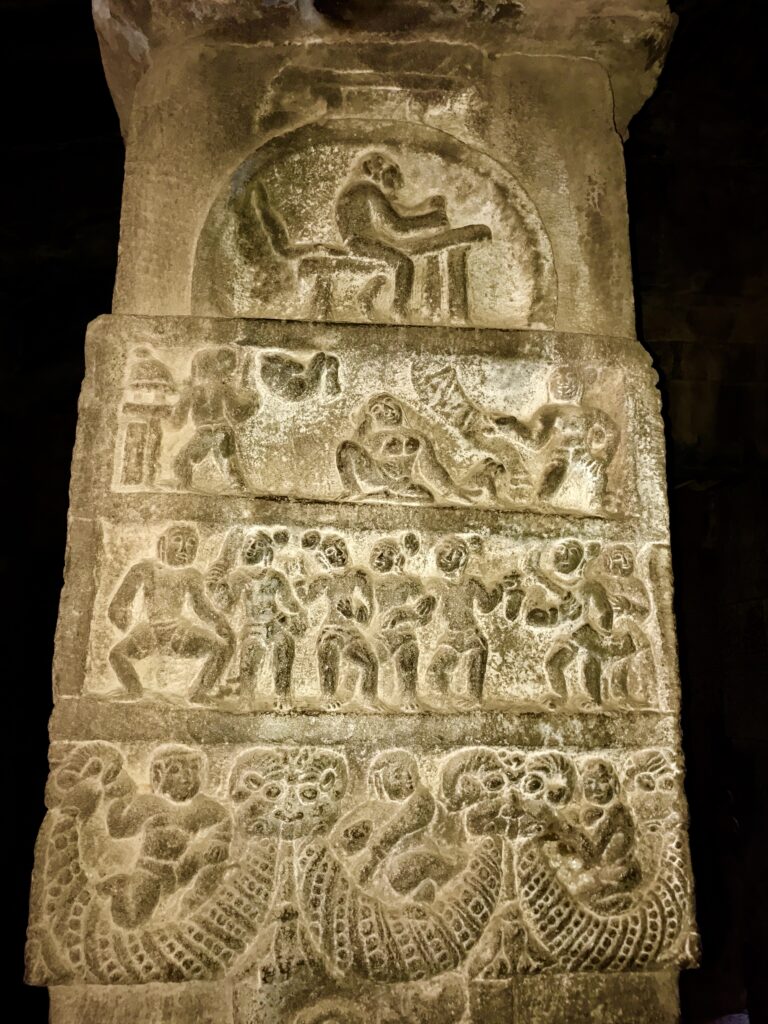
8th century Panchatantra legends panels at Virupaksha Shaivism temple. These 8th-century reliefs depict stories from the Panchatantra, a collection of fables for teaching moral conduct, and are considered a masterpiece of early Indian art. They were created by the Chalukya dynasty, who built the temple in the 8th century to commemorate their victory over the Pallavas.
Image Attribution: Ms Sarah Welch, CC BY-SA 4.0 https://creativecommons.org/licenses/by-sa/4.0, via Wikimedia Commons
Modern entertainers have mastered this art of packaging feelings. A song can make us cry in three minutes; a theory can take a lifetime to understand — and we might cry through most of it before it finally makes sense. Yet we keep choosing the song, because it’s easier to feel something ready-made than to wrestle with the slow work of understanding.

Source: https://thunderdungeon.com/2023/04/30/science-memes-for-the-math-and-science-brained-people/
Bollywood grasped this long before algorithms did. In the 1980s, when Amitabh Bachchan’s “angry young man” stormed across the screen, he wasn’t just a character — he was the voice of millions who couldn’t afford rebellion. He fought the system so the audience didn’t have to. That’s the genius of entertainment
— rebellion without consequence, catharsis without change. The hero triumphs, the music swells, and as the credits roll, life resumes its usual order.
The phrase “leave your brains home” is a common colloquial expression or review caveat used to describe films that are light on plot and logic but high on entertainment, spectacle, or simple fun. And hey, it’s not just Bollywood, I am looking at you, DisneyMarvel.
Art, they once said, held up a mirror to society. But today, it holds up a screen — glossy, glowing, and green. The reflection has been replaced by simulation. What we see isn’t what we are, but what we wish to be — a dream within a dream, as Nolan would say. And we love it. We’ve turned entertainers into gods — beings who feel on our behalf, live out our fantasies, and suffer our sorrows in high definition. Meanwhile, the scientist who might be curing a disease or the teacher shaping a generation scrolls by unnoticed beneath the glare of celebrity worship.
After all, it’s far easier to watch someone act like a hero than to try becoming one.
The Romans had “bread and circuses.” We have “food delivery and streaming platforms.” The principle is the same — only the visuals are sharper, and the subscription costs more.
When the weight of reality grows too heavy, we don’t confront it — we stream something lighter.
The entertainer has become our emotional stunt double. They cry, they rage, they love — so we don’t have to. We call it entertainment, but really, it’s emotional outsourcing.
There was a time when performance marked celebration — a pause in the rhythm of survival. Now, the pause is the rhythm. Life has become the intermission between episodes. Earlier, we sang to express joy; now, we perform joy for the camera. Festivals come with filters, heartbreaks with hashtags, and our deepest emotions are measured in “views.” Somewhere between the story and the screen, feeling turned into performance.
And perhaps the funniest part is that we know it — and still play along.
We laugh, we cry, we binge, fully aware that it’s all scripted. Yet, we keep pressing “next episode,” as though the next one might finally feel real. A song can move us in three minutes, a meme in three seconds. Both are fleeting, both addictive. Maybe that’s the modern condition — we’ve mistaken stimulation for meaning.
But every now and then, something cuts through the noise — a piece of music, a line in a book, a quiet film that doesn’t shout for attention. It doesn’t tell us what to feel; it simply holds space for us to feel it. It doesn’t entertain so much as it reminds — that we’re still capable of silence. That not every emotion needs an audience. That joy and sorrow, like breath, were never meant to be outsourced.
Perhaps that’s where the illusion finally breaks — not in rejecting it, but in smiling at how earnestly we believed it was real.
Leave a Reply